



Have you got a mossy roof? Read more to find out how much damage moss growth can cause to your property!
Often forgotten about and neglected primarily due to “out of sight, out of mind” mentality your roof is one of the most important components to your property. With this being said homeowners will more often than not leave their roof off their list of home maintenance and only come back to it when there is an issue such as a leak or damp.
What is Moss
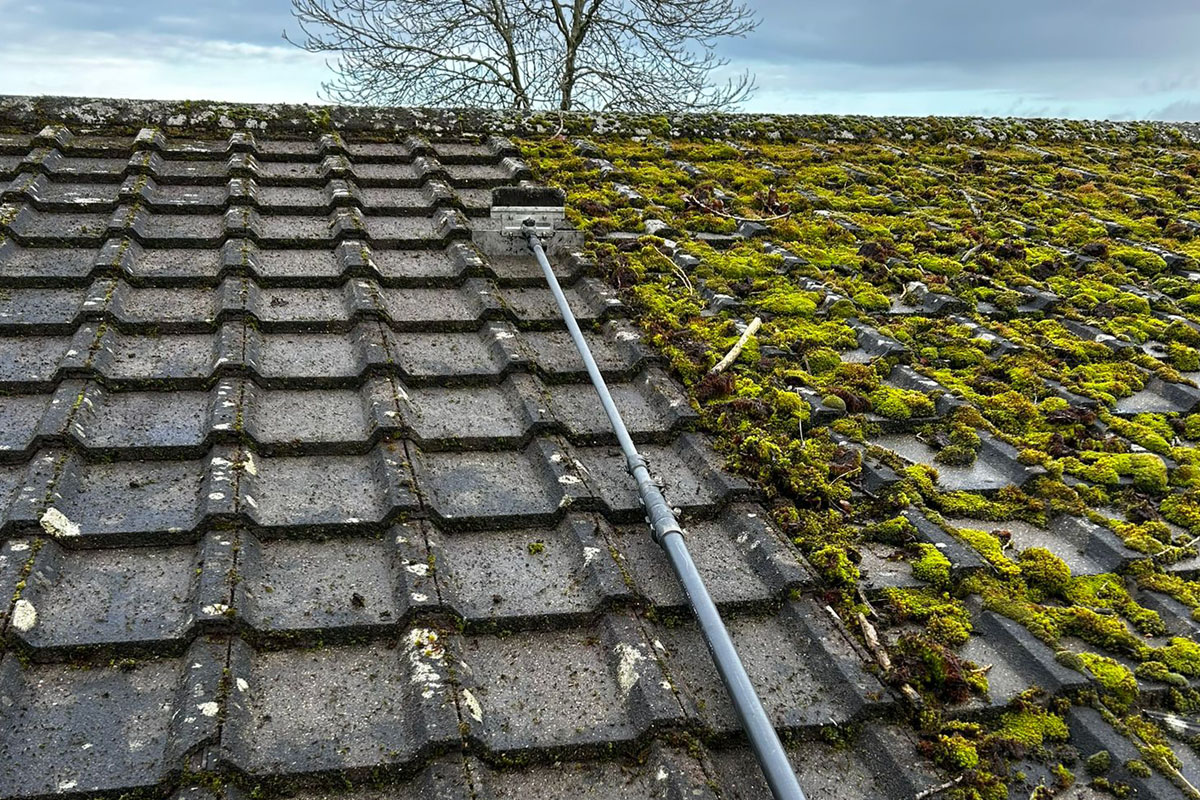
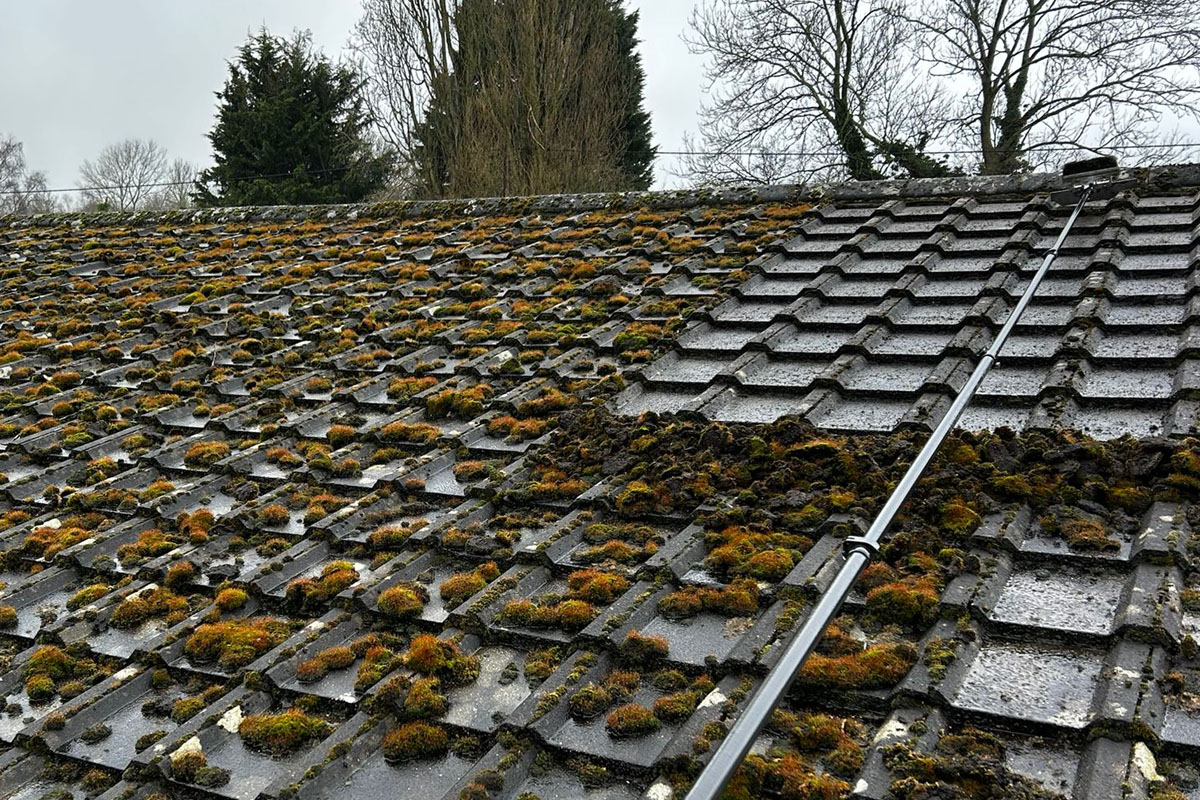
Moss is a small, non-flowering plant that thrives in damp, shaded conditions, which are common in the UK’s mild and often wet climate. On a homeowner’s roof, moss typically grows on tiles, especially those facing north or shaded by trees. While it may look harmless, moss retains moisture, up to 20 times it’s dry weight. Excessive moss growth can indirectly affect the integrity of roof trusses, though it is not usually the moss itself that causes the damage rather the moss holds large amounts of moisture against roof tiles, which can allow water to penetrate beneath them over time. If this moisture reaches the roof space, it can lead to persistent damp conditions, encouraging timber rot and fungal decay in roof battens and, in more severe or long-term cases, the roof trusses themselves.
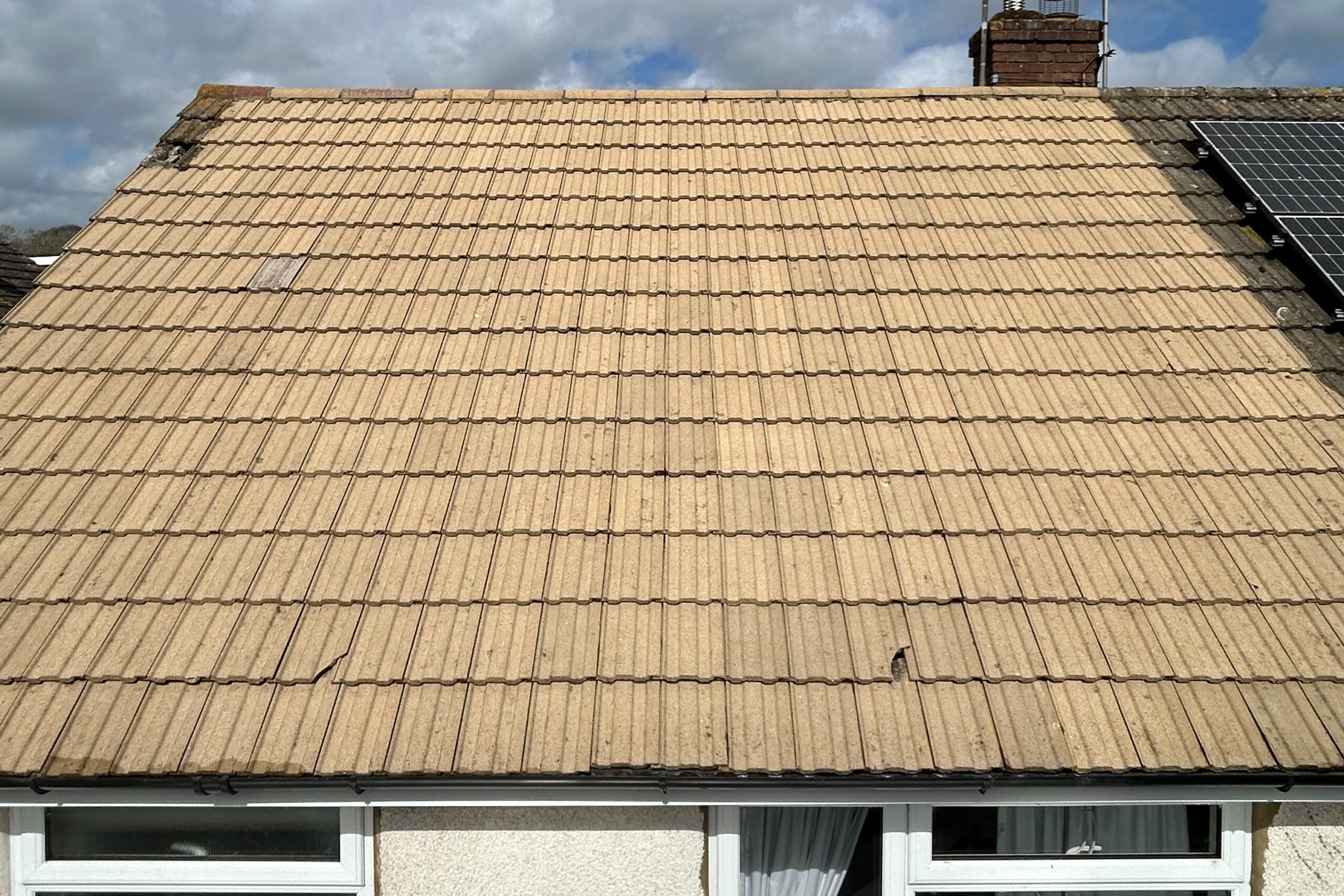
Along with this moss can cause spalling to occur on roof tiles through a combination of moisture retention and freeze–thaw action. Moss grows in the tiny pores and edges of roof tiles and holds water against the tile surface for long periods. When temperatures drop in the winter this trapped moisture freezes and expands. The repeated freezing and thawing puts stress on the tile’s surface, causing small flakes or layers of the tile to break away over time—this is known as spalling. As the tile surface deteriorates, it becomes rougher and more porous, which allows even more moisture and moss to take hold, accelerating the damage and reducing the tile’s lifespan.
The 2 main methods for removal of moss
There are two common methods of roof cleaning and moss removal. The scrape and biocide method involves manually scraping moss using specialised tools that match the profile of your tile. Followed by the application of a biocide treatment. This kills remaining moss, algae, and spores, between the joints or embedded on and in the surface of the tiles. This treatment will prolong the regrowth and is often used as a follow up maintenance treatment when the moss does finally start to regrow. And secondly there is the low-pressure wash method which uses controlled water pressure to remove moss and surface dirt giving same day instant clean results but must only be done on appropriate roofs that are safe to do so with. A post-biocide treatment will also be applied with this method too.
