


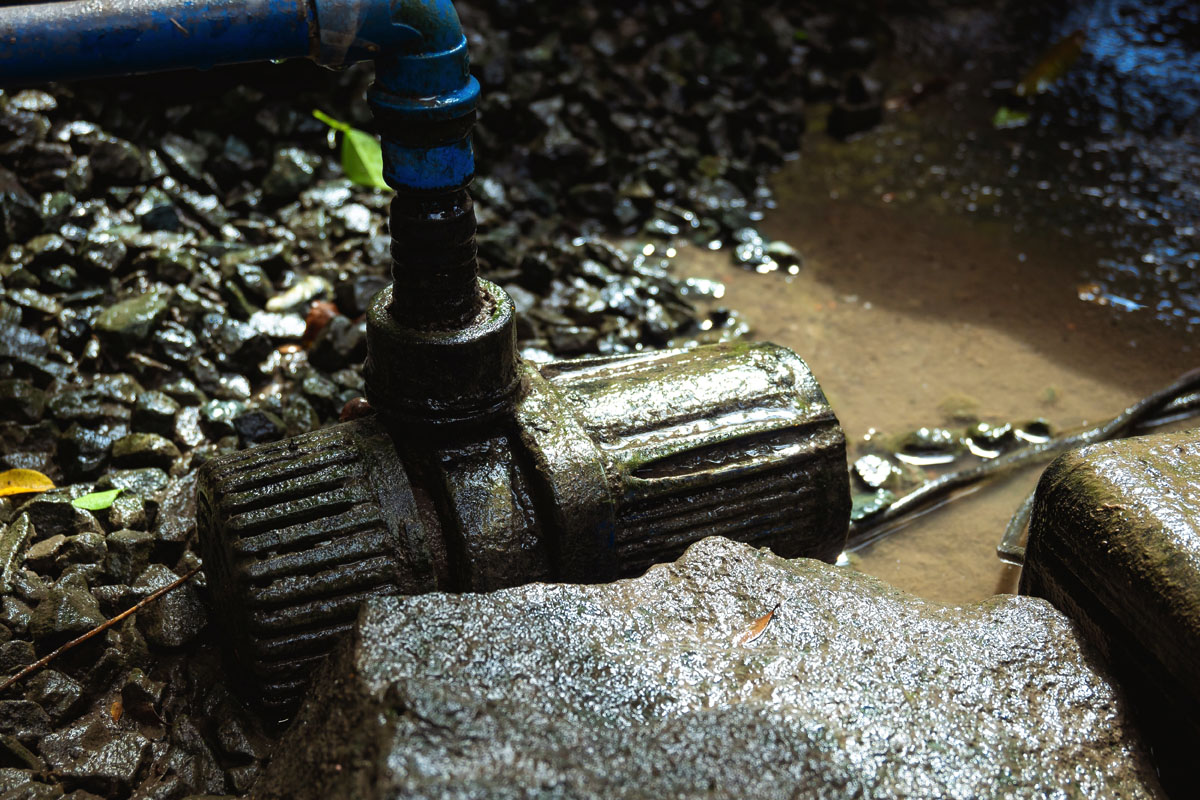

We often get challenged by our customers on the need for a filter and pump on their ponds, all too often we are told a story of how they had a pond years ago without a filtration system and instead had a bunch of pond weed that “filtered” the water. In many cases this worked for a period of time before crashing and losing all their Fish.
Now firstly plants do aid in the quality of your pond water, an obvious part to this is gas exchange, like with all plants in life the pond plants and pond weed will draw in CO2 and release oxygen, this in turn will help oxygenate the water creating a healthier environment for your Fish. Plants will also draw in nutrients from the water, these very same nutrients are also needed for other plants to grow such as algae and blanketweed, so the pond plants will directly compete for these nutrients helping the fight against blanketweed and algae. And from a water quality perspective one of the nutrients the plants take in for their own growth are nitrates. In low levels this is harmless and actually found in almost all bodies of water as it is a naturally occurring chemical. However, in higher levels it becomes increasingly toxic to fish and if left to get out of hand will cause long term health problems in your Fish and even death. But as we said just above, plants use these very nutrients so they can aid in keeping this at safer levels although the best answer to high nitrates is a series of water changes to help bring it down but that’s a subject for another article.
So again, why do you need a filter and pump for your pond. The answer is simple, with everything in life, times have changed, we have learnt from history and with that our technology and knowledge has developed so why shouldn’t we use what we now know to provide the best and healthiest environment we can for our garden Fish. We now know the negative affects on Fish health when they are left in an unfiltered environment such as a garden pond or indoor Fish tanks. Ultimately you need to shift your mind set, you are not keeping Fish, you are keeping water. Let me explain, the single most important thing to keeping Fish alive and well is the quality of the water, now of course a good diet is the other key part to a long healthy life but poor water quality will see a decline in Fish health far quicker than a cheap, poor diet. So please read on as we explain the science behind keeping your water healthy!
The Nitrogen Cycle
The Nitrogen Cycle is at the centre of Fishkeeping, whether it’s your indoor tropical Fish tank, marine reef tank or in this case your pond. Understanding what it is and how it works is crucial and once you do it will feel like a super power when it comes to diagnosing and correcting your pond’s water quality.
The nitrogen cycle is one of the most important natural processes in any pond, especially those containing fish. It describes how fish waste, uneaten food, dead plants, and other organic material break down and release ammonia into the water. Ammonia is highly toxic to fish, even at low levels. Fortunately, beneficial bacteria living in your pond filter convert this ammonia into nitrite, which is also harmful but less so. A second group of bacteria then converts the nitrite into nitrate, a much safer substance that plants use as a natural fertiliser. Over time, nitrate will gradually build up, which can lead to algae growth if not controlled. This is why regular pond maintenance—such as water changes, filter cleaning, and adding aquatic plants—is essential. A mature, well-balanced nitrogen cycle keeps ammonia and nitrite at zero, protects fish health, and helps maintain clear, healthy pond water all year round.
So going back to the initial point of why you need a filter and pump for your pond is exactly what we have explained. The beneficial bacteria responsible for a successful, nitrogen cycle require highly oxygenated water and somewhere to live, a pond filter is the perfect and ideal home for it. With a constant supply of fast flowing, oxygenated water rushing through the filter which houses filter media, a perfect surface for the bacteria to live on, this creates that very ideal home for the bacteria.
Not only is a filtration system responsible for keeping the water quality biologically stable it also aids in filtering out silt and debris from your pond in turn keeping the clarity of your water better. Without an adequately sized filtration system you may see floating silt suspended in the water column. Not to mention almost all filters nowadays come with a built in UV clarifier whose sole purpose it to fight again green water by killing the algae particles in the water column.
In conclusion, having a filtration system on a garden pond with Fish in our opinion is not just a choice but rather a necessity for the long-term health of your Fish. Yes, they can be a chunk of money for the initial upfront costs and yes, it is something you do have to maintain but these days there are a huge volume of brands and models available so if you have a budget you wish to stick too there will be a model that exists for you. And the majority of filters have some form of “easy clean” function to make the owners life just that bit easier.
If you need help with choosing your filtration system, installing it, maintaining it or even just need a little guidance then we are here to help, get in contact with us today!
